Industry growth means opportunity. But it also has responsibilities. All manufacturing units, power plants, refineries, and processing units release pollutants that affect air quality. So, selecting the right Air Pollution Control Equipment isn’t just about compliance. It’s about protecting people; it’s about adhering to strict environmental standards and building a responsible brand. Companies that don’t properly manage emissions can face penalties, risk shutdown, and tarnish their reputation.
The right system, on the other hand, increases efficiency, ensures regulatory approval, and supports long-term sustainability. This guide demystifies each major technology in plain terms so you can make better decisions with confidence.
Types of Air Pollution Control Equipment and How They Work
Different pollutants need different solutions. Hence, the selection of the appropriate Air Pollution Control Equipment depends upon the particle size, gas composition, temperature, and volume of discharge.
1) Baghouses and Fabric Filters
The systems are designed to trap particulate matter from exhaust gases. The air goes through fabric bags, and the dust remains trapped. This results in very high collection efficiency. They are widely used in industries such as cement, steel, food processing, and chemicals.
2) Electrostatic precipitator
Electrostatic precipitators apply an electrical charge to the particles and attract them to plates of the opposite charge. As a result, fine smoke and dust are removed effectively. This technology is employed in heavy industries and thermal power plants where the volume of gas streams is large.
3) Cyclone Separators
The cyclone uses centrifugal force to separate heavier particles from the air. They do not collect ultra-fine particles, but are effective as a first stage of separation. They are widely used in mining and bulk material handling industries.
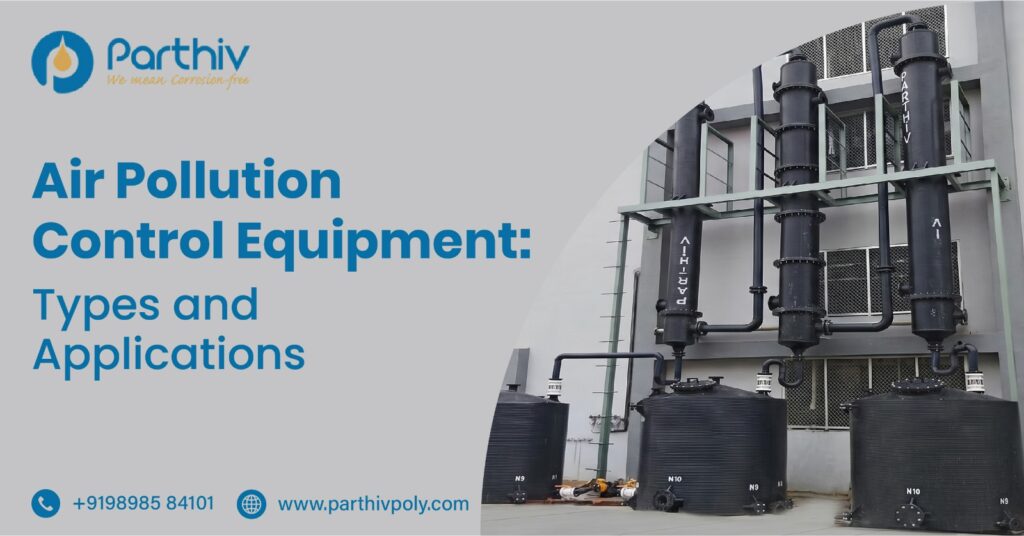
4) Scrubbers
Scrubbers remove gaseous pollutants and acid fumes. 2. They absorb contaminants with liquid or chemical solutions. Therefore, industries with sulphur dioxide, ammonia, and chemical vapour problems use scrubber systems.
5) Thermal and Catalytic Oxidisers
These systems thermally oxidise volatile organic compounds to carbon dioxide and water. As a result, harmful VOC emissions are significantly reduced in chemical and petrochemical plants.
Industry Use Cases
Almost all emission sources use:
- Power production plants
- Cement and steel production
- Petroleum and gas refineries
- Production of drugs
- Chemical processing plants
- Food & Beverage Industries
Each sector selects systems based on the pollution load and the statutory limits imposed by the regulatory bodies.
Choosing the right system
Before you select any solution, think about:
- Type and concentration of pollution
- Temperature and humidity of the exhaust
- Emission standards required
- Energy and maintenance requirements
- Operating cost (long term)
A well-established integrated system ensures compliance and operational stability.
Reliable Help to Create Long-Term Operations
Cleaner air makes businesses look better. High-quality Air Pollution Control Equipment thus safeguards both compliance and community health.
Contact Parthiv Poly for reliable industrial solutions. A manufacturer of high-quality storage tanks and plastic pipe fittings established in 2000. These products are crack- and leak-resistant, durable, and available in different sizes as per requirement.
Choose Parthiv Poly for reliable, responsible industrial operations.